
When Good Design Meets Great Presentation
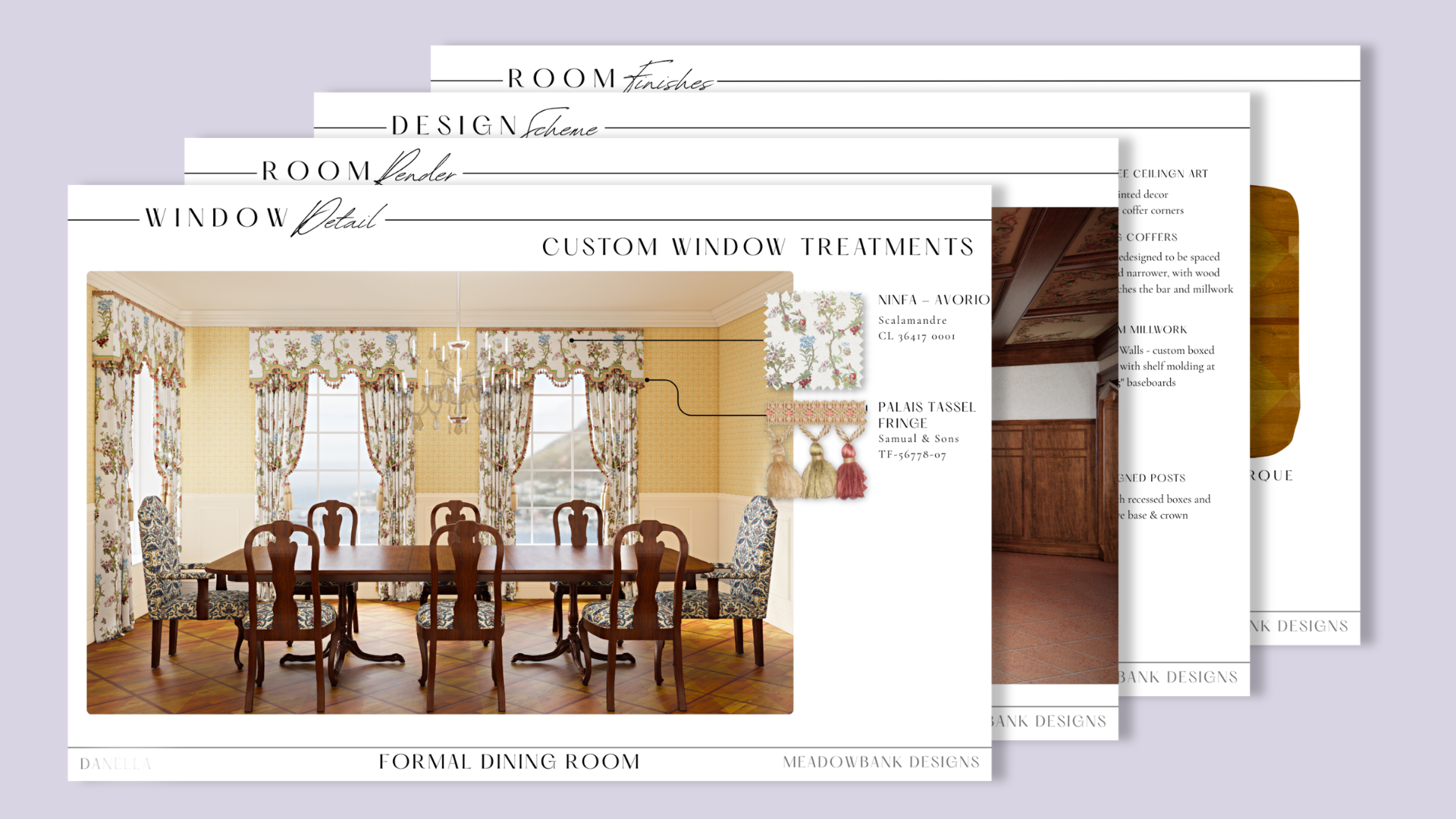
Interior Design by Meadowbank Designs
Your Presentation is Part of the Design Experience
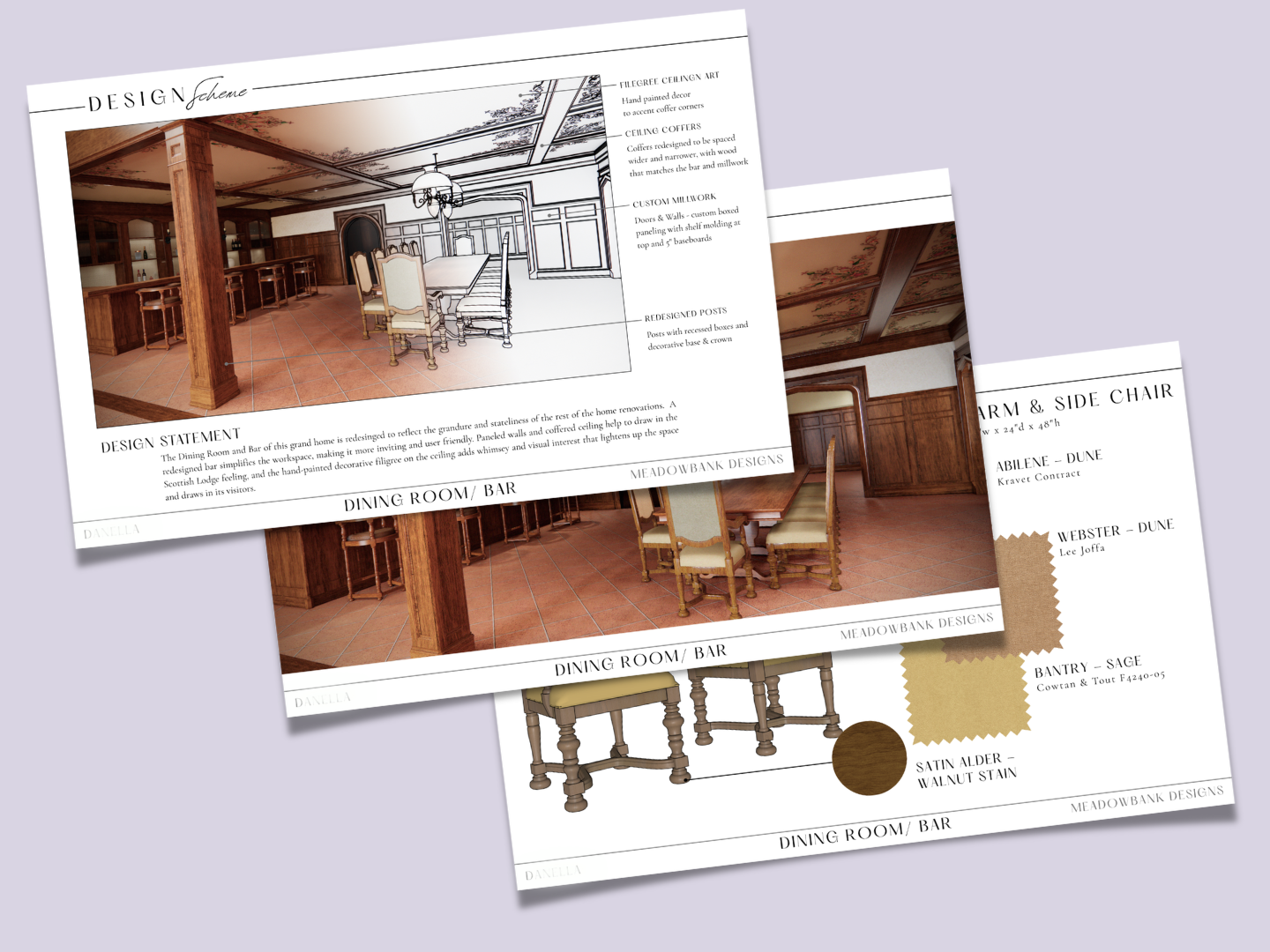
Interior Design by Meadowbank Designs
A great design doesn’t end when all of the plans are finished; it continues when you present that design to the client. That presentation is your opportunity to communicate to the client all of the thought and hard work that you’ve put into their design. The client can not see all of the hours spent creating layouts and drawings, ordering samples, and sourcing products and materials. They don't experience the frustrations you face in reconciling mismatched measurements, discontinued fabrics or color discrepancies. And they shouldn’t.
What the client should see is your design, presented in a thoughtful and professional manner that gives them the ability to understand your vision and the confidence to move forward with all of the changes you suggest.
When you are able to present your client with a cohesive and thoughtful design, they will feel that they have made a good investment in you, and by extension, their home.
You might not think that the extra time put into a final presentation is worth it, but the truth is, that this process is actually a very important extension of your process. It shows the client that you are organized and professional; that you understand their need to follow your thought process; and that you care enough to make your vision as clear as possible.
There is a difference between showing your work and presenting your work. And your clients will be able to recognize the extra effort of creating a presentation to earn their trust.
Great Presentation is About More Than Making Things Look Pretty
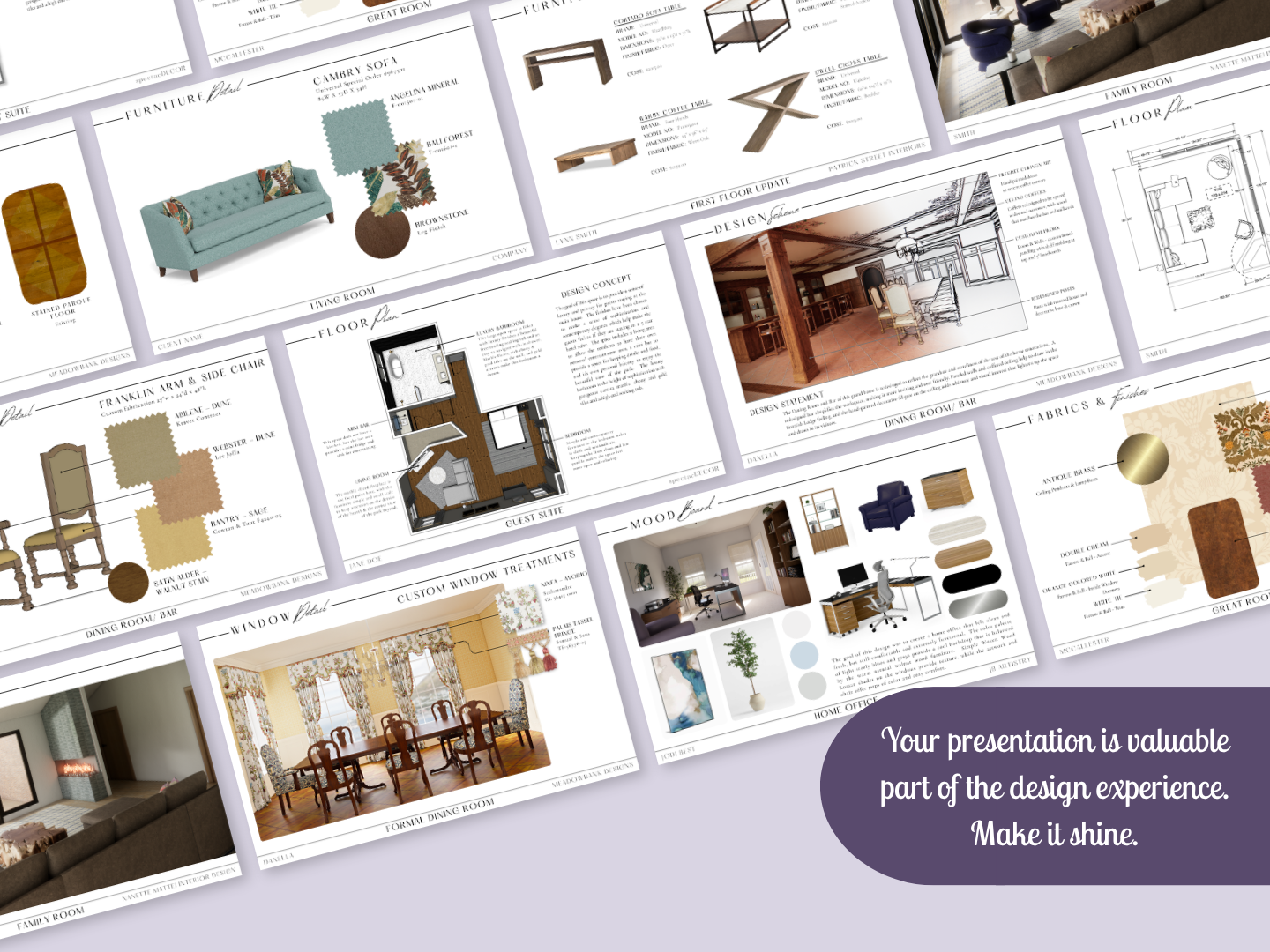
A polished presentation isn't simply about making a collection of beautiful pages; it's about making your design easy to understand, engaging to look at, and effortless for your client to navigate. Every element - from the layout and typography to the drawings and imagery - has a role to play in telling the story of your design.
It’s not about making your design look “Pretty” but about creating a presentation that is “Professional and Effective”. Your goal should be to create a document that communicates information clearly, while maintaining a visual hierarchy and cohesive aesthetic.
When creating documents, it’s important to ensure that you follow some basic guidelines:
Create a clear organizational process (for example sections should move through the home in a logical manner - most important room first, travelling through the home from there)
Maintain design consistency from page to page - pages should follow the same layout, and should display images and information in a consistent manner
Create page layouts that are thoughtfully arranged - this includes everything from typography and spacing, to ensuring images are sized and positioned properly.
Ensure plans, elevations, renderings, specifications and selections work together on the page and do not overlap or interfere with each other in a confusing way
Make sure the information is easy for the client to follow and understand
It’s also important to make sure that you have physical samples that you are using to supplement your presentation. Conceptual images, product photographs and drawings are important to understand your vision, but clients need to touch, feel and see the actual materials that they will be living with, and the more you have - the better.
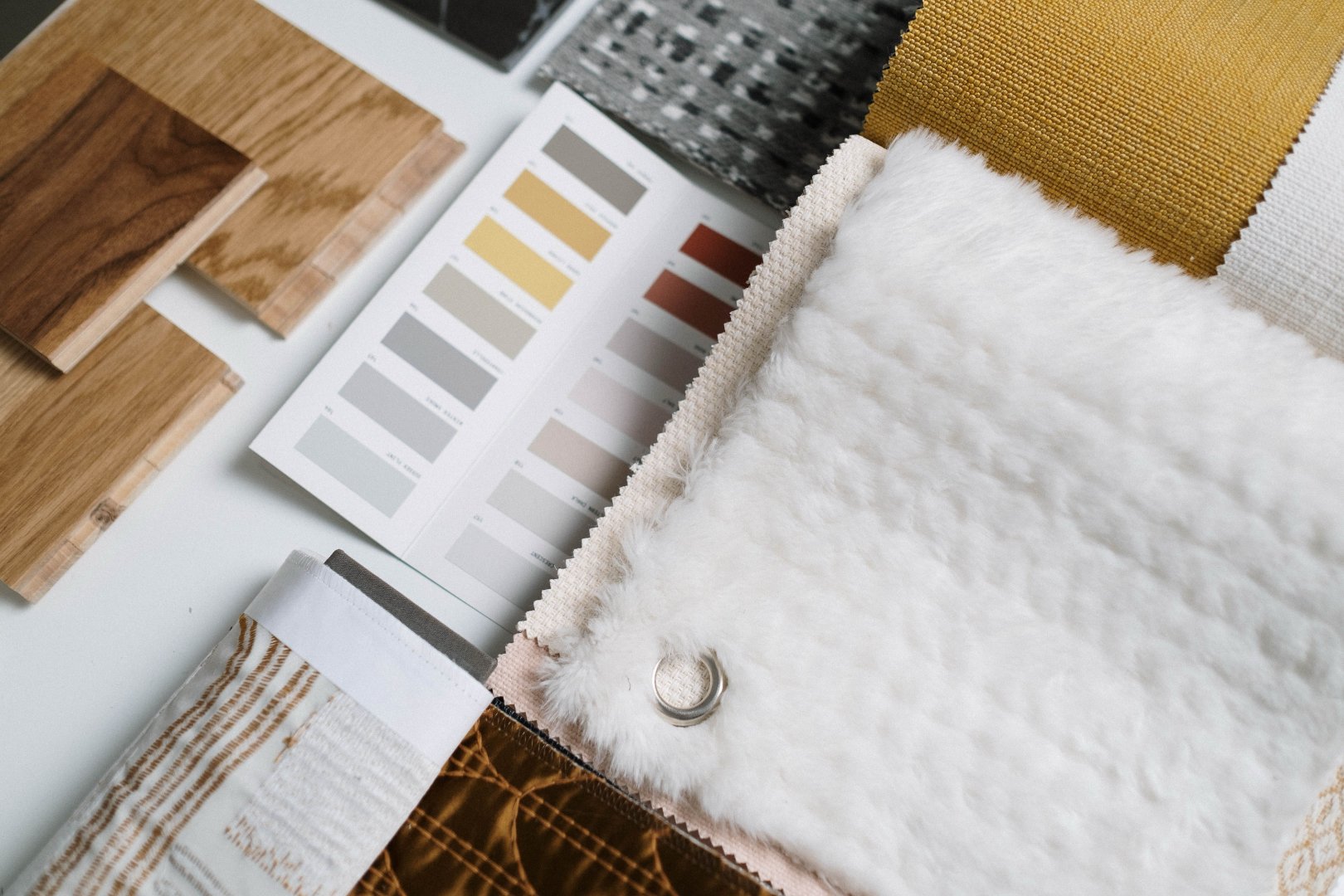
It’s important to have physical samples to supplement your presentation.
The Work Behind a Polished Presentation
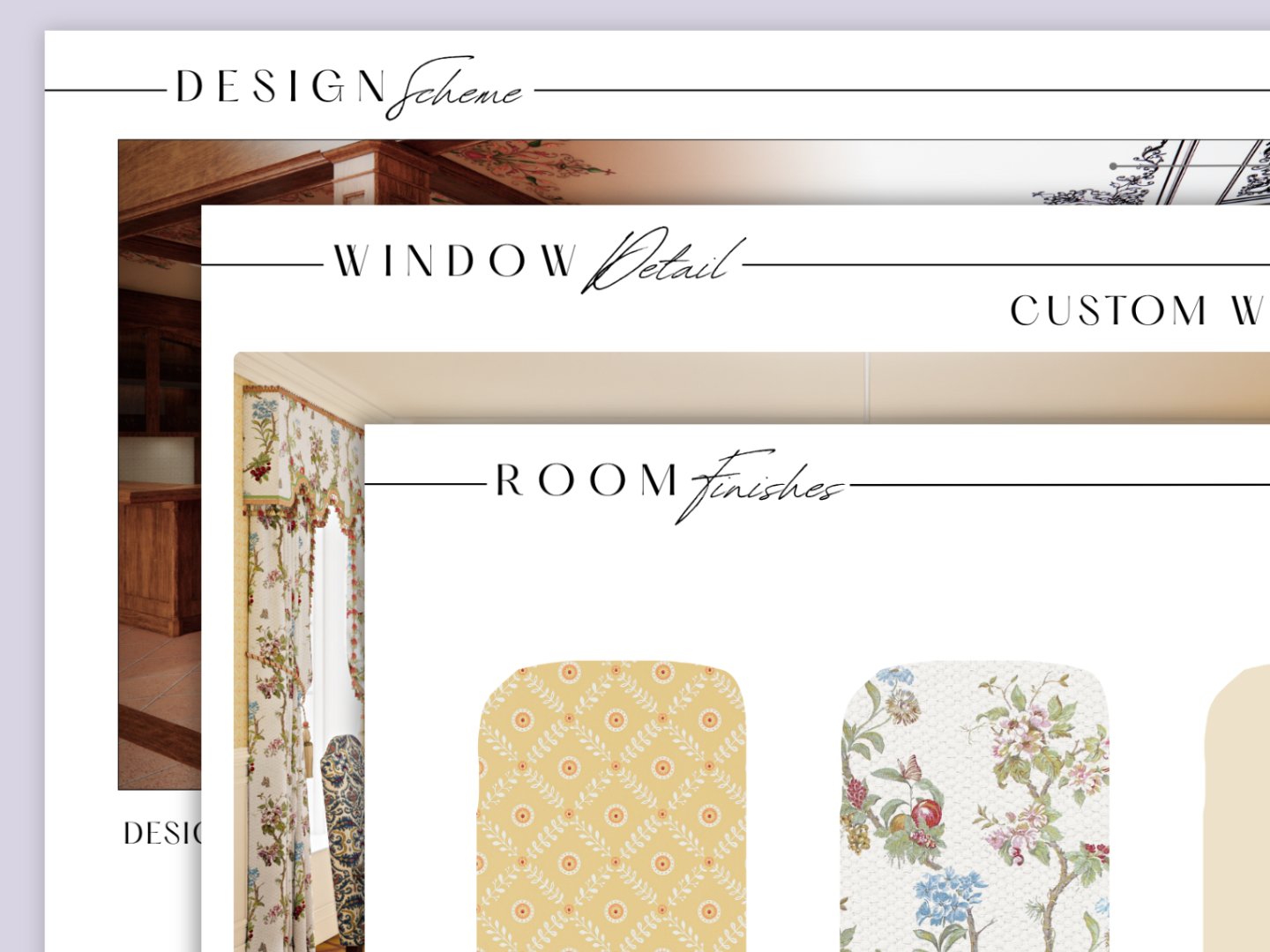
Keep design and layout details consistent for a professional looking presentation.
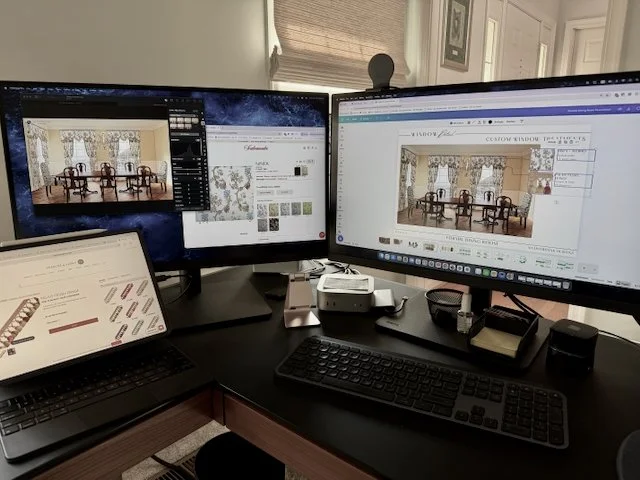
What looks effortless to the client rarely happens effortlessly behind the scenes. Creating a cohesive, professional presentation often involves hours of organizing information, formatting drawings, preparing visuals, building layouts, making updates, and checking the countless details that can easily get overlooked when you're also managing the rest of the project.
Some designers love the process of creating beautiful design presentations for their clients. It helps them organize their thoughts, builds excitement around the design, and makes sure everyone involved understands and agrees on the direction of the project. For designers that enjoy the process of creating design presentations, having a consistent system helps to keep that process efficient. Templates, reusable layouts, organized project files, and a clear workflow can all help reduce the amount of time spent reinventing the wheel for every project.
For others, this part of the job can feel more like a production task than a creative one. When you're balancing design decisions, sourcing, client communication, project management, and the business side of running your own firm, finding the time to pull everything together into a polished presentation can be challenging.
And when deadlines are looming, it's easy for presentation work to become the thing that gets pushed to the bottom of the list. Not because you don't value the presentation or the experience you're trying to create for your client, but simply because there are only so many hours in the day.
The reality is that a thoughtful presentation takes time. It takes organization, attention to detail, and a willingness to refine all of the individual pieces until they work together as a whole. For an independent designer, that can be a significant investment of time - time that could also be spent designing, meeting with clients, sourcing, or growing your business.
As an independent designer, and a creative professional, you could absolutely do all of this work yourself. The question is: Should you have to?
When Your Presentation Finally Matches the Quality of Your Design
When the quality of your presentation reflects the quality of your design, something changes: your client isn't just seeing a collection of drawings and selections - they're experiencing the thought and expertise behind your work. A well-crafted presentation reinforces your professionalism and allows the value of your design to come through clearly.
A good presentation isn’t an afterthought. It’s an integral part of your design process. It brings the process full-circle and allows your creative process to shine in a way that draws your client in and makes them part of your vision.
A professional and polished presentation can:
Build client confidence
Make decisions easier to understand
Reinforce the designer’s expertise
Create a more memorable client experience
Help justify the value of professional design services
Give the designer confidence when walking into a presentation
When you are thoughtful and intentional about presenting your design to your client, everyone in the process feels seen, valued and understood. Your clients won’t be able to curb their excitement for the project to begin.
Making Room for What You Do Best
Your design deserves to be presented with the same care and attention that went into creating it. A thoughtful, polished presentation doesn't just make your work look beautiful—it helps your clients understand your vision, feel confident in your recommendations, and experience the value of the work you've put into their project.
And while creating those presentations may be an important part of the design process, it doesn't mean you have to be the person doing every bit of the production yourself.
That's where I can help.
As a Virtual Design Assistant, I work with interior designers to turn their design ideas, drawings, and project information into clear, polished presentation documents that feel cohesive and professional—without adding another production task to your already full plate.
If presentation production is one of those parts of your projects that you wish you had more time for, I'd love to talk about how I can help. Sometimes having the right support behind the scenes is all it takes to give your great design the presentation it deserves.
Don’t think you need help with your presentations?
Check out some tools I’ve created to help you streamline your presentation process.