
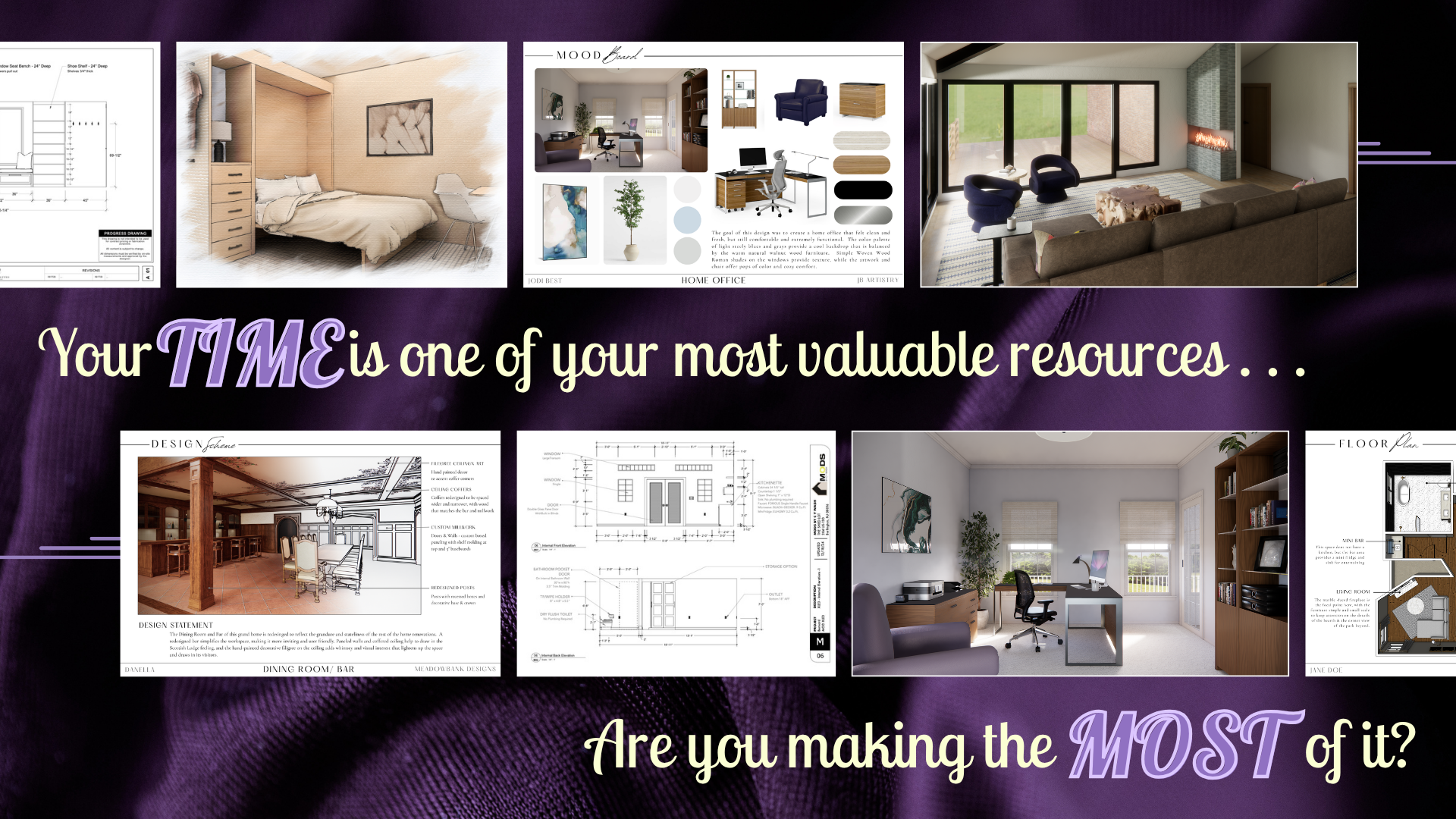
Your Time Is Your Most Valuable Resource … Are You Making The Most of It?
Running a small business - and an Interior Design business - can feel like a masterclass in time management. When every aspect of your business feels like the most important, it can be hard to prioritize your time and attention in a way that feels productive. Often we focus on the looming deadlines, and the other (but still important) work gets pushed to the back burner.
Time spent on presentations and documentation is necessary, but the work of client relations, business management and personal development are just as important to maintaining and growing your business.
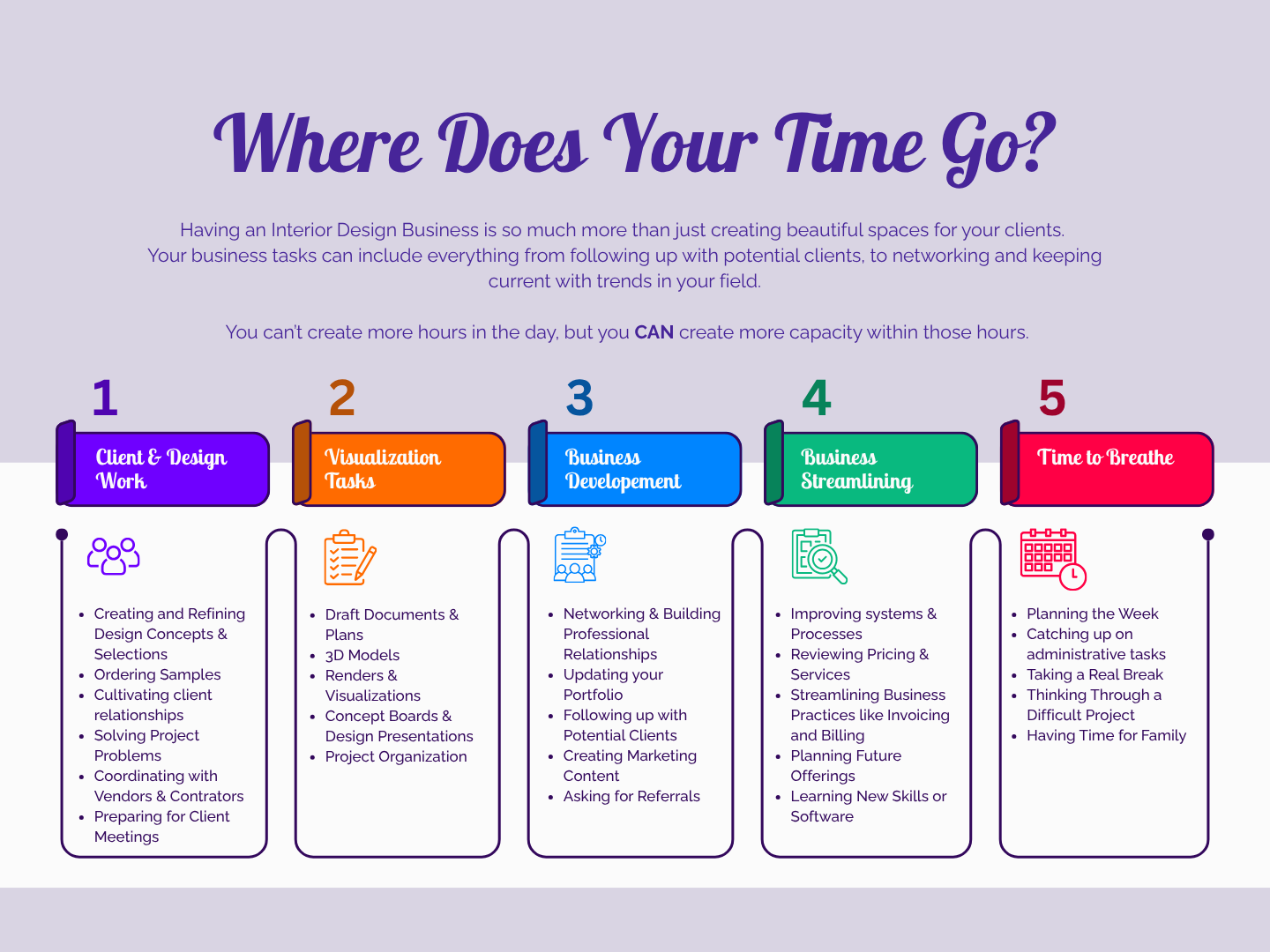
Do you know where your time is going? Are you able to focus on all aspects of your business? When prioritizing your time, it can be helpful to categorize your tasks so you can see where energy is being spent, and where you could be more strategic with your attention.
Client and Design Tasks - This is the work that only you can do. It involves cultivating client relationships, creating and refining design concepts, solving project problems and other general design work. These tasks are what identify you as an Interior Designer, and the reason why your clients seek out your expertise.
Visualization Tasks - Creating visuals is important to communicate your designs to your client, sell your vision, and ensure all participants are on the same page. These tasks include things like creating concept and mood boards, draft documents and plans, and renders and 3D models. These tasks can be time consuming, but they show off your design expertise, professionalism, and vision in a way no other task can.
Business Development Tasks - All small businesses are looking for ways to grow their business, and making time for these tasks is important to achieving that goal. Networking and building professional relationships, keeping your portfolio up to date, and creating marketing content are all things that get your business noticed, and help to keep it feeling relevant in your market.
Business Streamlining Tasks - Think of this as keeping the machine working. These tasks involve the administrative activities like billing, invoicing and pricing. It’s also important to make time for professional development which can include learning new skills and software and improving your systems and processes.
Time to Breathe- This is where most small business owners fall short. Because this time is not an obvious business “task” it is often the first thing to be pushed aside and neglected. Taking time to plan your upcoming week, catch up on administrative tasks, and spending time with family and friends, will help you reduce stress and prevent burnout. Keeping your time balanced is the best way to ensure you have the mental and emotional energy to spend on the tasks that are most important to you.
Finding ways to streamline your workflow can make a difference, In my post on Time Saving Tips for Interior Designers I explore ways to make your day-to-day work more manageable.
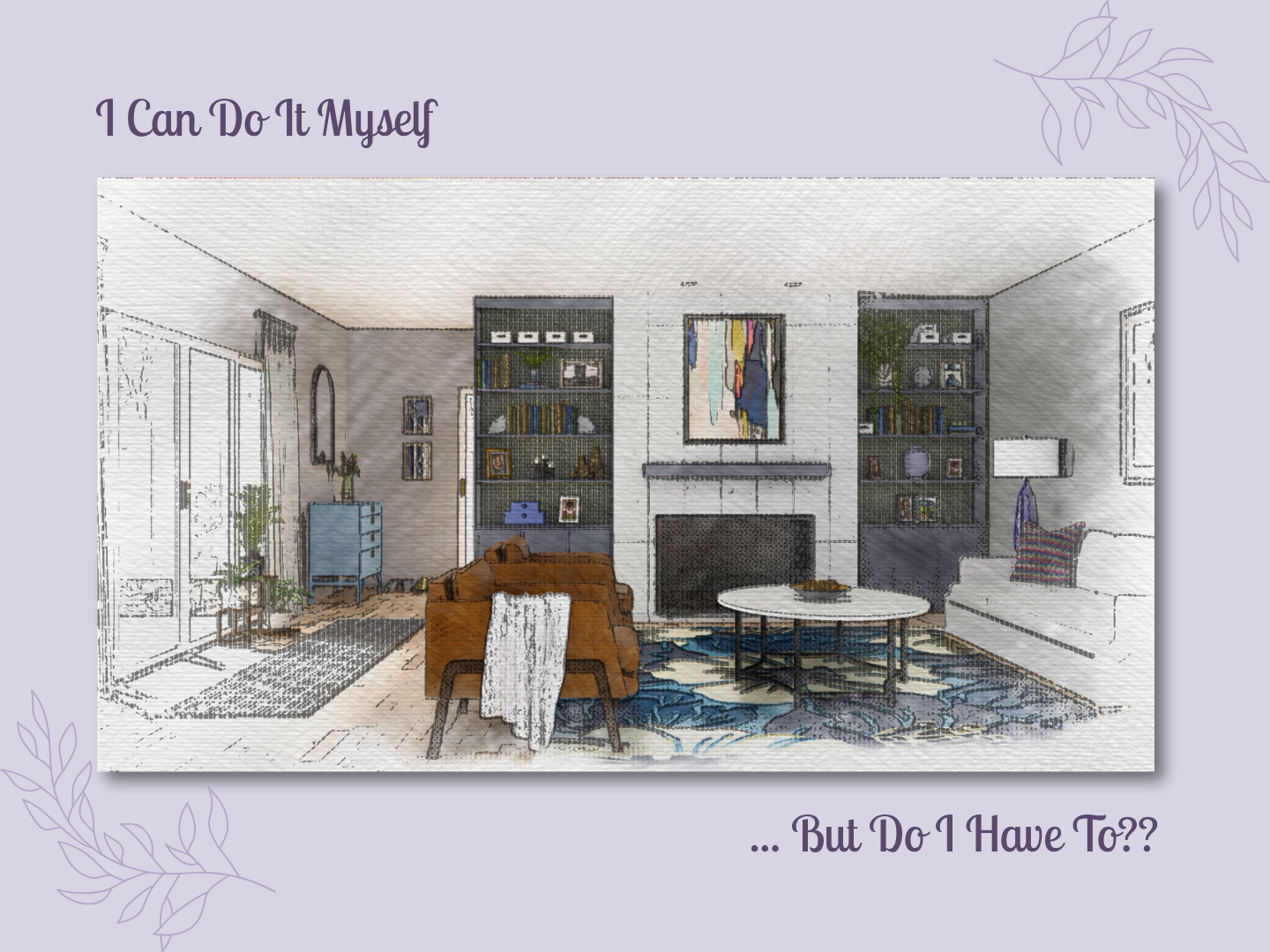
When “I Can Do It Myself” Becomes a Limitation
When you first started your interior design business you probably did everything yourself. This was just part of the process of getting your business off the ground. You had limited resources, limited money, and all the time to devote to one or two clients. Learning to do each step along the way gave you control and taught you flexibility and perseverance.
But as your business grows, you may have come to realize that it’s not efficient or effective for you to do everything on your own. When immediate project deadlines take priority, the tasks that aren't directly connected to the current client can keep getting pushed aside. Parts of your business get neglected, and the stress starts to build up.
Getting help creates capacity within the business you already have. The goal doesn't necessarily have to be taking on more clients or growing faster. Getting help with the right work can give you:
More time to focus on your clients, design work, and business.
More energy to maintain a healthier balance between work and life.
More capacity to develop the skills and creative work you actually enjoy.
The Better Question To Ask..
As your business grows, it can be easy to look at a task and think, “I can do that myself.” And sometimes, doing it yourself really is the right choice. But capability isn't always the best measure of where your time should go.
Instead, try asking: “Is this the best use of my time and energy?” If a task could be handled by someone else, consider what you could do with that time instead. Could you give a client more attention? Spend more time developing your designs? Work on your business? Learn something you've been wanting to learn? Or simply finish the day with a little more energy left?
Asking for help doesn’t mean giving up control. It means you’ve learned to prioritize where your time and energy matter. It gives you the ability to take more control over the aspects of the job and projects that matter most to you, while ensuring that all the parts and pieces of your business are working together effectively.
The reason that I started my own business was because I recognized that sometimes to be successful, all you need is a little help. My goal is to give you more time and capacity to focus on your clients, your creative work, and the business you're building. Because your success isn't just about getting the work done — it's about having the space to do your best work.
To find out more about me, and the help I can provide - take a look at my website, send me an email, or give me a call. Together, let's find the best way to give you the time and space you need to do your best work.
If you're wondering what it might look like to bring someone in to support your work, I've also written about Working with a Virtual Design Assistant and what to consider when exploring outsourcing.
Want to connect? I’d love to share with you how I can help.